
Time management for a calmer semester
Time management for students means building a week that can survive real life: lectures, reading, work, deadlines, friends, and rest.
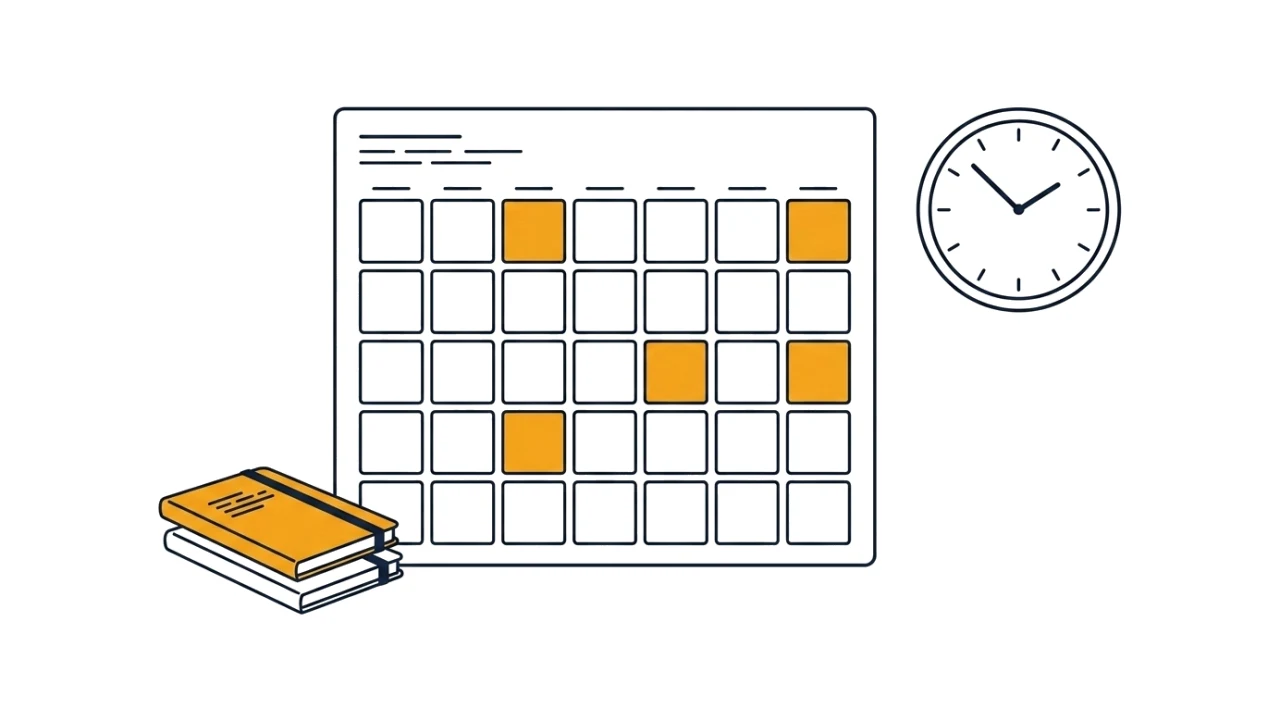
Plan the semester first
Start with exam dates, paper deadlines, presentations, block seminars, and private commitments. Then plan backwards from the most important dates.
This makes large tasks visible early and turns them into weekly milestones.
Use blocks, not endless lists
A to-do list tells you what exists. A calendar block tells you when it will happen.
Make each block concrete: 'outline introduction' is easier to start than 'write paper'.
- Reading block
- Exercise block
- Writing block
- Review block
- Buffer block
Prioritize by impact
Not every task deserves the same amount of attention. Prioritize by deadline, exam relevance, and personal uncertainty.
If a detail has little impact, make it smaller. Student weeks often fail because too many small tasks become too perfect.
Protect buffers
Buffers are part of the plan. Illness, group work, difficult readings, and job changes happen.
Keep at least one flexible block per week so small delays do not break everything else.
Weekly planning checklist
- Add fixed appointments
- Choose three main priorities
- Schedule review
- Leave one buffer block
- Plan one real break
More from StudyTexter
Useful external resources
Frequently Asked Questions
How do I plan a semester?
Start with exam dates and deadlines, then work backwards into weekly milestones.
Calendar or to-do list?
Use both: the calendar reserves time, the list defines the task.
How can I stop procrastinating?
Make tasks smaller, define the first step, and use fixed time blocks instead of vague intentions.